Built on Science. Governed by Systems. Measured by Impact.
At Recyclekaro, sustainability is not a narrative layer. It is embedded into how waste is collected, processed, monitored, and converted into reusable materials. Our best practices are grounded in environmental science, worker safety, regulatory compliance, and industrial discipline ensuring recycling delivers real, measurable outcomes.
Sustainability is achieved not by intent, but by systems that prevent pollution, protect people, and maximise recovery.
Why Best Practices in Recycling Matter
E-waste and battery waste contain over a thousand toxic substances that can contaminate air, soil, and water if handled improperly. Informal or partial recycling leads to irreversible environmental and health damage.
Best practices ensure that recycling reduces environmental harm instead of shifting it downstream. They also protect workers, enable traceability, and ensure compliance with evolving regulations
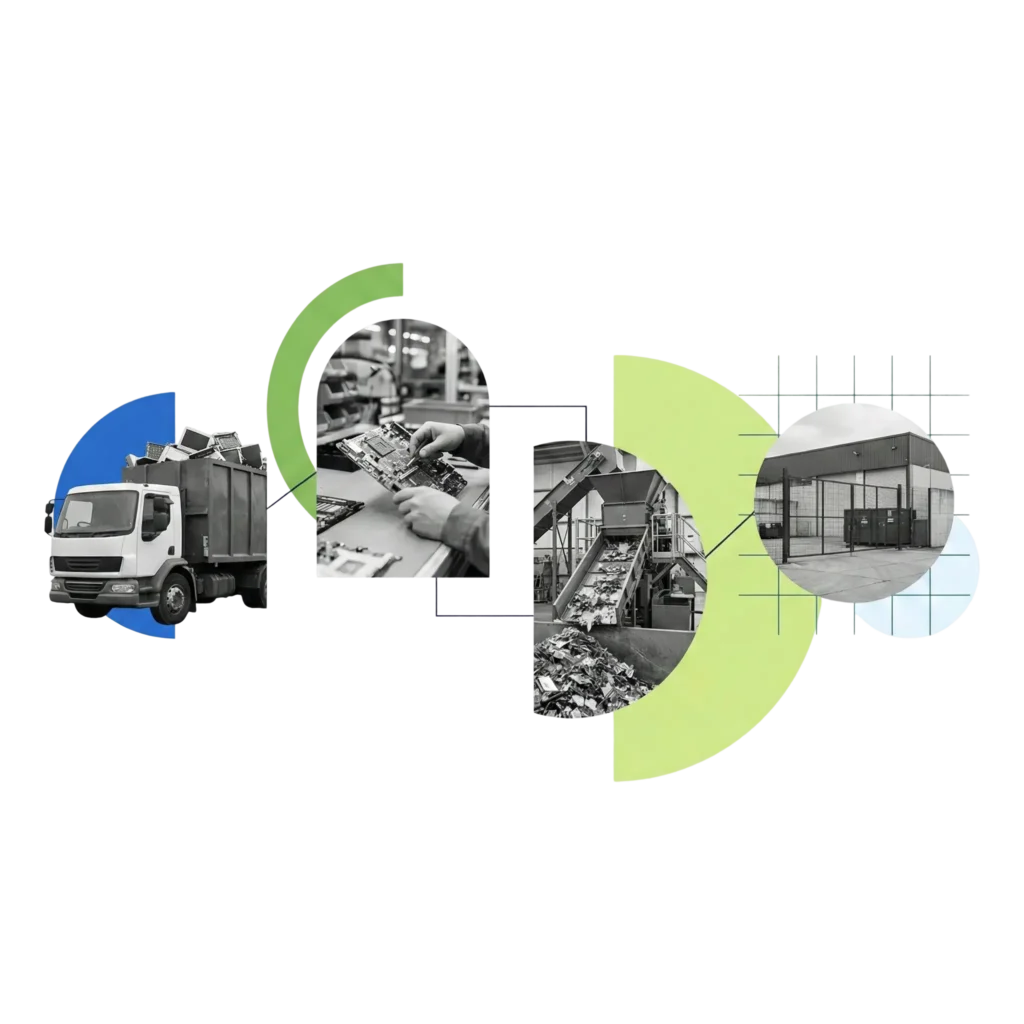
Formalised collection networks supported by incentives and digital tracking improve recovery rates.
Dangerous-Goods Handling
Lithium-ion batteries require specialised packaging and transport protocols to prevent fires.
Logistics Optimisation
Regional hubs reduce unnecessary movement of low-value fractions and emissions
Safe Dismantling & Pre-Processing
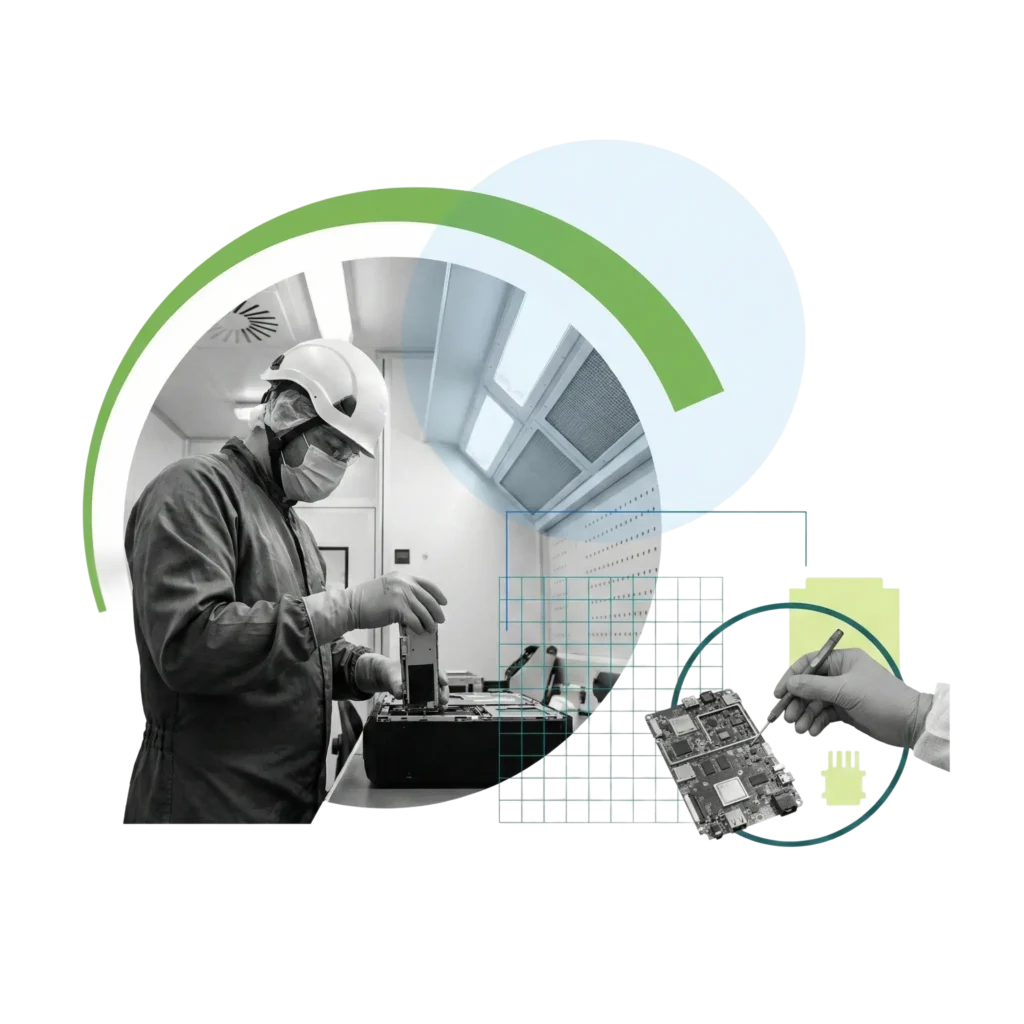
Unscientific dismantling exposes workers to toxic fumes, heavy metals, and fine particulate matter. Recyclekaro follows engineered dismantling protocols in controlled environments.
Ventilated dismantling halls
Fire suppression systems
PPE zones and worker training
Batch-level tagging and traceability
Zero-Discharge | Hazardous Waste Management
Continuous monitoring of stack emissions, soil, and groundwater ensures environmental performance remains within regulatory limits at all times
Zero discharge systems
Controlled handling of hazardous fractions
Authorised disposal of non-recoverables
Formalising the Informal Ecosystem
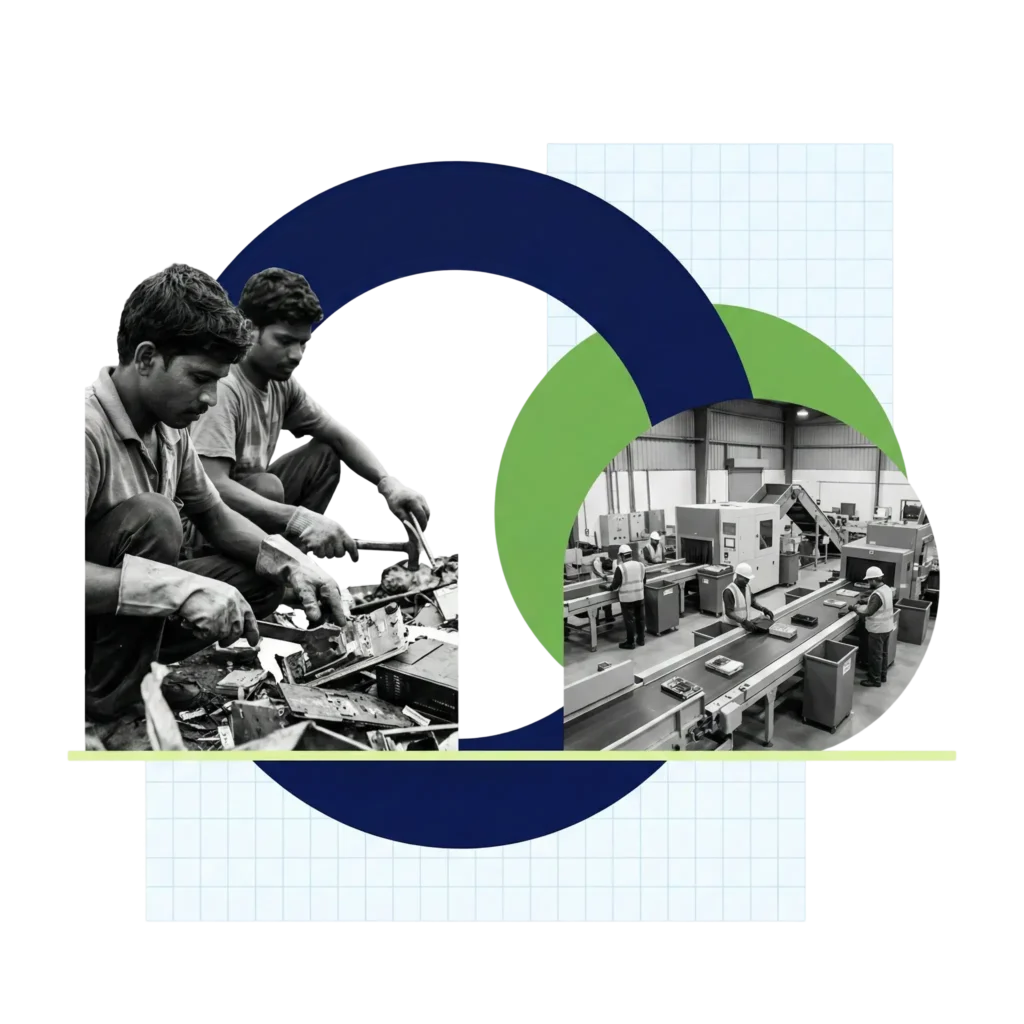
Informal collectors handle a majority of e-waste in developing economies, providing critical last-mile access.
Recyclekaro supports formalisation through training, legal channelisation, safer tools, and prohibition of hazardous practices, improving outcomes without disrupting livelihoods
Measured Environmental & Circular Impact
Recycling, Not Just Channelisation
Reduced soil, air, and water contamination
Lower lifecycle emissions
Reintegration of materials into manufacturing
Sustainability Backed by Systems, Not Claims
Recyclekaro’s sustainability framework is built on operational discipline, regulatory compliance, and measurable outcomes delivering recycling that stands up to scrutiny.